

5 Steps to Make Specialty Coffee at Home (Easy Guide for Busy People)

Updated: Apr 15
Let’s be honest: the world of specialty coffee can feel a little like an exclusive club. Between the complex jargon and the $1,000 espresso machines, it’s easy to feel like you need a chemistry degree just to brew a decent cup on a Tuesday morning.
At small beanz coffee co., we believe that world-class coffee belongs in everyone’s kitchen: not just in high-end cafes. You don’t need to be a "coffee snob" to appreciate the vibrant, citrusy notes of a Burundi single-origin or the balanced sweetness of a well-crafted blend.
If you are a busy person who wants to upgrade your morning routine without adding stress, this guide is for you.
We’ve distilled the science of brewing into five manageable steps so you can brew with confidence every single day.
Step 1: Start with Exceptional Beans (The "What")
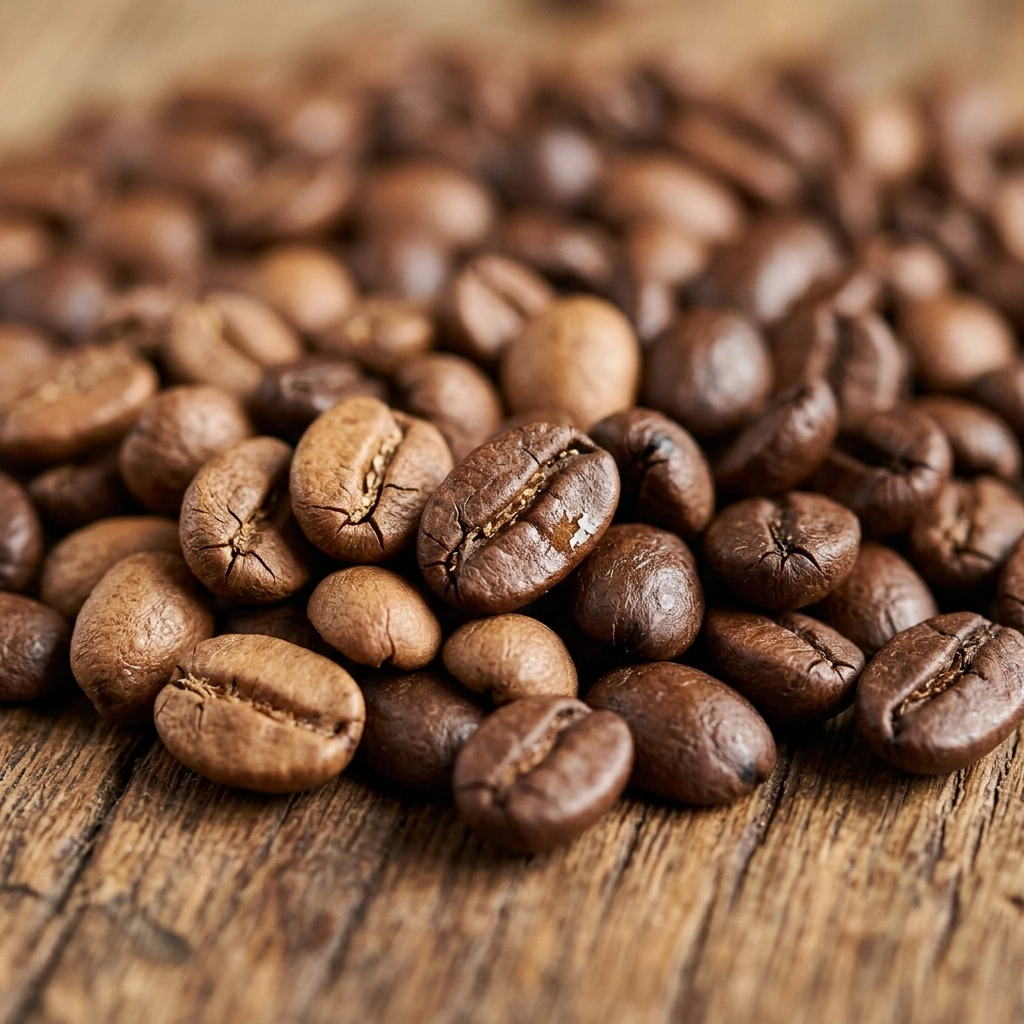
The single most important factor in your coffee's flavor is the quality of the bean. You can have the best equipment in the world, but if the beans are stale or over-roasted, the final cup will never shine.
What is Specialty Coffee?
Specialty coffee isn't just a marketing buzzword. It refers to beans that have scored 80 points or higher on a 100-point scale by a Certified Q Grader. This means the beans are free of primary defects and offer a distinct flavor profile shaped by their terroir (the soil, altitude, and climate where they were grown).
Why Freshness Matters
Once coffee is roasted, it begins a process called degassing, where it releases carbon dioxide. After about 3-4 weeks, the volatile aromatics that give coffee its "bright" or "floral" notes begin to fade.
Small-Batch Roasting: We roast in small batches to ensure you receive your beans at their peak flavor window.
Whole Bean vs. Pre-ground: Always buy whole bean if possible. Grinding breaks the bean’s cellular structure, increasing surface area and accelerating oxidation.
Roast Level: During roasting, sugars and amino acids react to create complex flavors. In our Light, Medium, and Dark Roasting Guide, we explain how these roast levels impact what you taste in your mug.
Step 2: Master Your Grind (The "How")
Think of your grind size as the "speed limit" for water passing through your coffee. If the grind is too coarse (like sea salt), the water rushes through, resulting in under-extraction (sour, thin taste). If it’s too fine (like powdered sugar), the water gets stuck, leading to over-extraction (bitter, dry taste).
Who is this for?
Every brewing method requires a specific grind size to extract the perfect balance of flavors.
French Press: Coarse (looks like sea salt).
Drip Coffee/Chemex: Medium-Coarse (looks like rough sand).
Pour Over/Hario V60: Medium-Fine (looks like table salt).
Moka Pot/Espresso: Fine (looks like sugar or flour).
Pro Tip: Invest in a burr grinder rather than a blade grinder. Burr grinders crush the beans into uniform particles, whereas blade grinders chop them into uneven shards, leading to an inconsistent brew.
Step 3: Use a Digital Scale (The "Why")
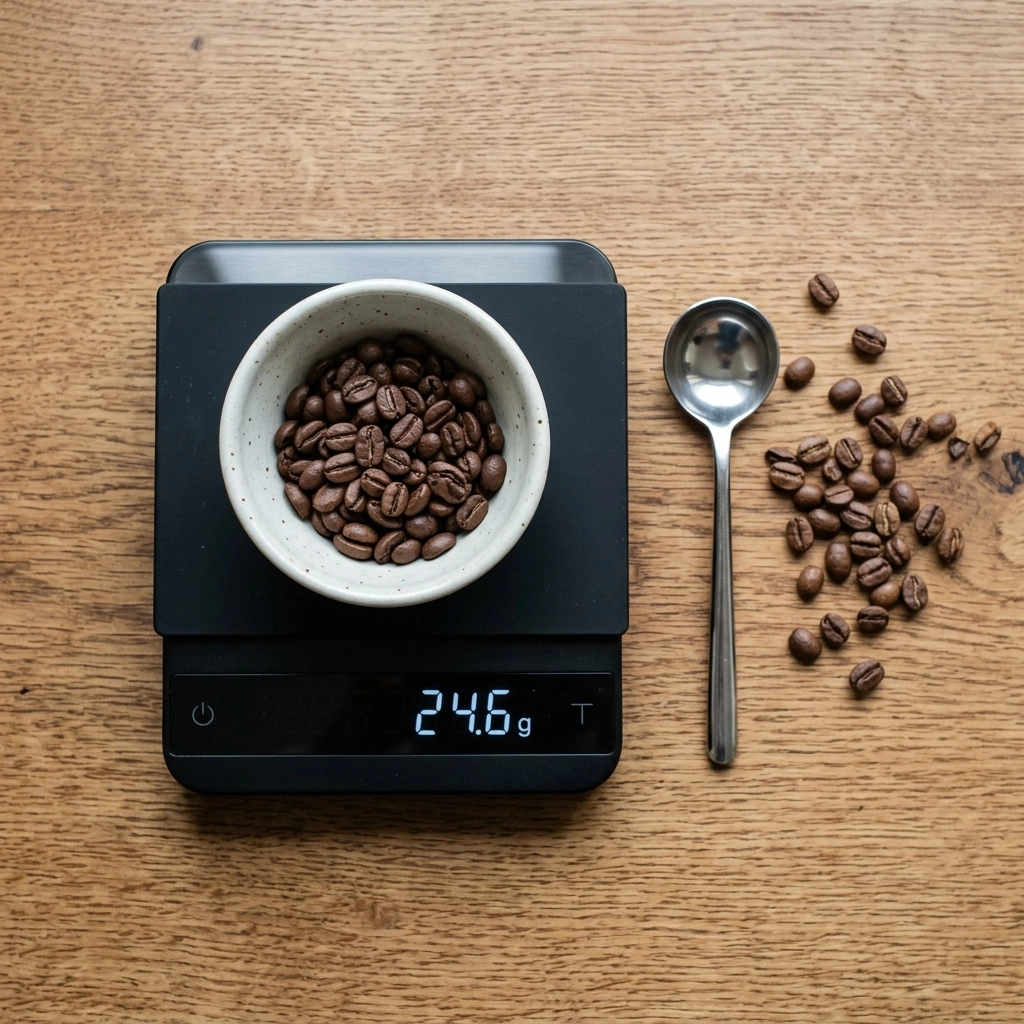
If you want your coffee to taste amazing AND consistent EVERY SINGLE MORNING, you have to stop "eyeballing" it with a scoop. Different beans have different densities; a scoop of a dark roast weighs less than a scoop of a dense, light-roasted bean from Burundi.
The Golden Ratio
The industry standard for a balanced cup is a 1:18 ratio. This means for every 1 gram of coffee, you use 18 grams of water. However, you can adjust to taste from 1:16-1:17.
For one cup: 20g of coffee to 320g of water.
For a larger pot: 40g of coffee to 640g of water.
Why use grams?
Water is measured by volume (ml) and weight (g) interchangeably (1ml = 1g). Using a scale allows you to be precise and repeatable. If your coffee tastes too strong today, you can easily adjust your ratio to 1:17 tomorrow.
Step 4: Respect the Water Temperature
Coffee is 98-99% water. If your water isn't the right temperature, you won't extract the sugars and oils effectively.
The Technical Data
Ideal Range: 195°F to 205°F (90.5°C to 96°C).
The "Boil Rule": If you don’t have a thermometer, bring your water to a boil and let it sit for 30–60 seconds. It will naturally drop into the ideal brewing range.
Water Quality: If your tap water tastes like chlorine, your coffee will too. Use filtered water to let the delicate tasting notes of the coffee shine through.
Pro Tip: If you are brewing a very light roast, use water closer to 205°F to help break down the dense bean structure. For darker roasts, 195°F is safer to avoid pulling out harsh bitterness.
Step 5: Perfect the "Bloom" and Pour
Whether you are using an AeroPress or a classic drip machine, how you introduce water to the coffee matters.
The Bloom Phase
When you first pour hot water over fresh grounds, you'll see them bubble and swell. This is the bloom.
Pour: Add just enough water to saturate the grounds (usually double the weight of the coffee).
Wait: Let it sit for 30–45 seconds.
Why: This allows the trapped CO2 to escape. If you don't bloom, the gas acts as a barrier, preventing the water from fully extracting the flavor from the grounds.
Choose Your Journey
Not sure which brewer to start with? Check out our Brewing Guides for deep dives into specific methods. For a great all-rounder, we recommend the AeroPress: it’s indestructible, fast, and incredibly forgiving for beginners.
Enjoy the Ritual
Specialty coffee isn't about following rules for the sake of being "fancy." It’s about slowing down and enjoying a high-quality product that was grown with care and roasted with precision. When you use fresh roasted, quality beans you are tasting the hard work of farmers from across the globe.
By mastering these five steps, you're not just making a caffeine delivery vehicle; you're crafting an experience.

Ready to level up your morning? Explore our latest small-batch roasts at the small beanz shop and find the perfect bean for your new home routine. Whether you like it heavy-bodied and chocolatey or bright and wine-like, we’ve got something for you.
Make it a great day – Happy brewing!


Comments