
How to Choose Coffee Beans: A Licensed Q Grader's Guide

Updated: 44 minutes ago
Learn how to choose coffee beans using flavor, roast, process, origin, freshness, and guidance from a Licensed Q Grader, without confusing coffee jargon.
Choosing coffee beans should feel exciting, not like homework. Start with the flavors you already enjoy, then use roast level, processing method, origin, freshness, and brew method to narrow the field.
A good bag should make that decision easier with clear information, not bury you in coffee jargon.
TL;DR
Choose coffee by flavor first, then check roast level, process, origin, freshness, and brew method.
A Licensed Q Grader uses trained sensory evaluation to assess what is actually in the cup.
small beanz coffee co. is for drinkers who want expert guidance without the coffee-shop attitude.
The under-60-second Coffee Match Quiz turns your usual flavor preferences into a practical starting point.
Why your coffee choice matters
A wall of coffee bags can make a simple purchase feel complicated. One label leads with country, another with roast level, and another with tasting notes that sound more like a fruit basket than coffee.
You do not need to learn every coffee term before buying beans. The goal is to identify a few clues that reliably point toward a cup you will enjoy.
The best coffee choice is the one that matches your palate and your brewing routine, not the bag with the most impressive vocabulary. That is the standard I use when helping people choose coffee.
How do you choose coffee beans?
Use this order,
Flavor direction
Roast level
Processing method
Origin
Roast freshness
Brewing method
Flavor comes first because every other detail is useful only if it helps predict what you will taste.
If you usually enjoy | Start by looking for | Approach carefully |
Chocolate, caramel, and nuts | Round sweetness, medium roast, fuller body | Very floral or sharply citrus-led descriptions |
Citrus, stone fruit, and florals | Light-to-medium roast, washed coffees, bright acidity | Heavy roast character that hides origin flavor |
Berry, tropical fruit, and wine-like notes | Natural or experimental processing, fruit-forward descriptions | Traditional profiles described only as cocoa or nuts |
Smooth, familiar coffee flavor | Balanced blends, medium roast, low-key sweetness | Highly fermented or intensely fruit-led coffees |
Treat this table as a starting point, not a rulebook. Two coffees with similar labels can still taste different, but these clues can move you closer to the right neighborhood.
Start with the flavor you want
Before reading the origin or variety, decide what kind of cup sounds good tomorrow morning.
Do you want something comforting and chocolatey? Something clean and citrusy? Or something unexpectedly fruity?
Tasting notes are comparisons, not added flavors. A bag that says apricot, honey, and floral is describing sensations the roaster found in the cup. It does not mean those ingredients were mixed into the beans.
Choose one broad flavor lane,
Comforting : chocolate, caramel, toasted nuts, and brown sugar
Bright : citrus, apple, stone fruit, and floral notes
Fruit-forward : berries, tropical fruit, and wine-like character
Balanced : sweetness, moderate acidity, and familiar coffee depth
Once you know your lane, the rest of the label becomes much easier to use.
Use roast level as a flavor clue: not a quality score
Roast level tells you how strongly the roasting process may shape the cup. It does not tell you whether the coffee is good or bad.
A lighter roast usually leaves more of the coffee’s origin character visible. You may notice more acidity, florals, fruit, or tea-like clarity.
A darker roast usually brings more roast-driven flavors, heavier body, and familiar bittersweet notes. Medium roast often sits between those poles, although every roaster uses roast labels a little differently.
If you are moving from grocery-store coffee into specialty coffee, a balanced medium roast can be an approachable first step. From there, you can explore brighter coffees without turning your first bag into a test of endurance.
The right roast depends on preference and purpose. No roast level is automatically superior.
Read the processing method for a better flavor prediction
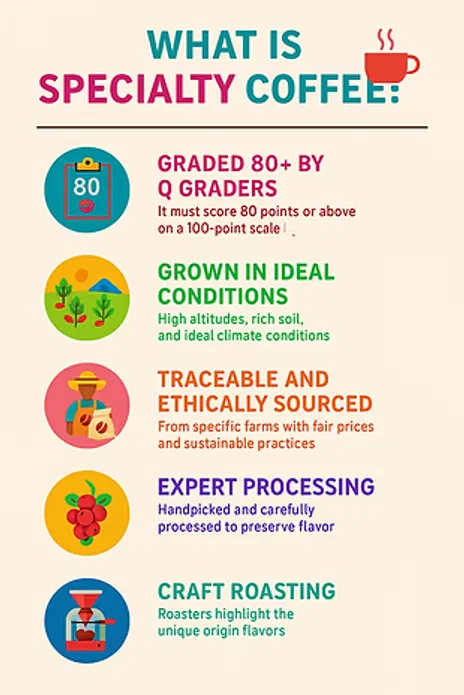
Processing describes what happens after coffee cherries are picked and before the green beans reach the roaster. It can change sweetness, clarity, body, and fruit character.
Washed : often clean, clear, and easier to read from one sip to the next
Natural : often fuller, sweeter, and more obviously fruit-led
Honey : often balances clarity with extra sweetness and body
Experimental processes : can create intense or unusual flavors for adventurous drinkers
This is not a ranking. A clean washed coffee is not automatically better than a fruit-heavy natural coffee. They are different routes to different cups.
For a first purchase, choose,
Washed when you want clarity
Natural when you want obvious fruit
Honey when you want a middle ground
If you want to explore the full journey from cherry to green coffee, browse the coffee education resources from small beanz coffee co..
Use origin to refine your choice
Origin matters, but it should not be your first and only decision. Country names cover many growing regions, elevations, varieties, and processing traditions, so no country has one fixed flavor.
Use origin as a clue after choosing your flavor direction. Specific regional or farm information often gives you more context than a broad country label.
A transparent label may also tell you the coffee’s,
Region
Elevation
Variety
Processing method
Producer or cooperative
If those terms feel crowded, you are not doing anything wrong. Coffee sourcing does not require specialized knowledge. The useful question is whether the label helps you understand what you are likely to taste.
For example, Tanzania AA Mondul Estate is described with notes of Meyer lemon, apricot, honey, and floral character. It is recommended for pour-over because that method highlights its clarity and delicate sweetness.

Check freshness without turning it into a countdown
Coffee changes after roasting. A roast date gives you more useful context than a distant best-by date because it tells you when that change began.
That does not mean the newest possible bag will always taste best the instant you open it. Freshly roasted coffee releases gas, and different coffees settle at different rates.
The practical approach is to,
Buy an amount you can use comfortably
Keep the bag sealed between brews
Store coffee away from heat, moisture, and strong odors
Pay attention to how the flavor changes over time
Freshness should answer three questions,
Is there a roast date?
Can you finish the bag while it still tastes lively?
Has the coffee been stored properly?
Good storage protects a good purchase. It cannot rescue beans that never matched your taste.
Match the beans to how you brew
Your brewer changes which parts of a coffee become most obvious. Choose beans that fit both your palate and the equipment you actually use.
Pour-over tends to highlight clarity and separation between flavors.
French press emphasizes body and texture.
Espresso concentrates everything, including acidity and bitterness.
Automatic drip can handle a wide range of balanced coffees.
Cold brew often softens acidity and emphasizes sweetness and body.
These are tendencies, not restrictions. You can brew a natural coffee as pour-over or a washed coffee as espresso.
Start with the intended flavor, brew consistently, and adjust the grind before deciding the beans are wrong. If your cup tastes bitter, sour, weak, or hollow, the beans may be fine and the extraction may need attention.
For more practical guidance, read Grind Size Mastery and Water Quality: the Forgotten Ingredient in Great Coffee.

What does it mean when coffee has been evaluated by a Licensed Q Grader?
A Licensed Q Grader is trained to evaluate coffee through structured sensory work. For a buyer, the useful part is not the title alone. It is having someone separate measurable cup qualities from vague sales language.
When I evaluate coffee for small beanz coffee co., I look for,
Clarity
Sweetness
Balance
Texture
Finish
Whether the stated flavor direction survives brewing
That helps me describe who a coffee is for instead of simply calling every release amazing.
A Licensed Q Grader cannot decide what you personally like. No credential can. The value is a more disciplined description of what is in the cup, followed by a recommendation that respects your preferences.
Build a simple coffee preference record
You do not need a tasting journal full of technical scores. Save four details after each bag,
The tasting notes that attracted you
The processing method
The brewer you used most
Whether you would buy it again
Then add one plain sentence,
“I liked the bright citrus but wanted more sweetness.”
Or,
“The chocolate profile was easy to drink but too quiet.”
After a few bags, patterns become obvious. You stop shopping from scratch and start using evidence from your own kitchen.
Common mistakes when choosing specialty coffee beans
Buying only by roast level : Medium roast covers a wide range of flavor. Read the tasting notes and process too.
Treating acidity as a defect : In coffee, acidity can describe pleasant brightness, like citrus or crisp fruit. Harsh sourness may point to brewing rather than the bean itself.
Assuming expensive or unusual means right for you : A rare flavor profile is still the wrong purchase if you want a familiar chocolate-led cup.
Changing beans and brew recipe at the same time : Keep one variable steady so you can tell whether the coffee or the brewing change improved the cup.
Ignoring your daily routine : The right coffee for a careful weekend pour-over may not be the one you want in an automatic brewer before work.
FAQ
How do I choose coffee beans if I am new to specialty coffee?
Start with flavors you already enjoy, then choose a balanced roast and a clear tasting-note description. A familiar chocolate, caramel, or nut-led profile is often easier to read than an intensely fermented coffee.
What does it mean when coffee has been evaluated by a Licensed Q Grader?
It means a trained sensory professional assessed the coffee’s cup qualities. That evaluation can support a clearer description of flavor and quality, but it does not guarantee every drinker will prefer the same coffee.
Is light roast or dark roast better?
Neither roast level is automatically better. Light roasts tend to show more origin character, while dark roasts tend to show more roast-driven flavor and heavier bitterness.
Do tasting notes mean flavors were added to the coffee?
No. Tasting notes usually describe natural flavor associations found during brewing and tasting. Apricot, cocoa, or floral notes are comparisons unless the bag specifically says the coffee is flavored.
Should I choose washed or natural coffee?
Choose washed coffee for a cleaner, clearer cup and natural coffee for fuller fruit character. Honey processing often sits between them with both clarity and sweetness.
Does coffee origin tell me what the beans will taste like?
Origin gives you a useful clue, but it does not predict flavor by itself. Region, variety, processing, roast approach, and brewing all shape the final cup.
How should I choose beans for espresso?
Choose the flavor profile you want in concentrated form, then look for a coffee the roaster describes as balanced enough for espresso. Small grind changes can matter more than switching beans immediately.
What is the easiest way to find coffee I will like?
Begin with your preferred flavors and take the under-60-second Coffee Match Quiz. Use the result as a starting point, then record what you liked after brewing the bag.
One last thing
Do not let a label pressure you into pretending you enjoy a coffee. The smartest buyer is not the person who chooses the rarest origin or repeats the most tasting terms.
It is the person who can say what they liked, what they did not, and what they want in the next cup.
That process stays practical; trained sensory judgment, plain-language guidance, and coffee chosen around the drinker.
Related guides
Comments